
Case Studies
Soil moisture probes to optimise irrigation
What is the best soil moisture monitoring solution for my farm? How can soil moisture probes improve irrigation scheduling and water use efficiency? How do I know when to irrigate and how much water to apply?
Farmers searching for reliable soil moisture monitoring systems are using real time soil moisture data to make informed irrigation decisions, reduce water waste and improve crop performance. By monitoring soil moisture levels in the root zone, growers can better match irrigation to plant needs and gain greater control of water management across their property.
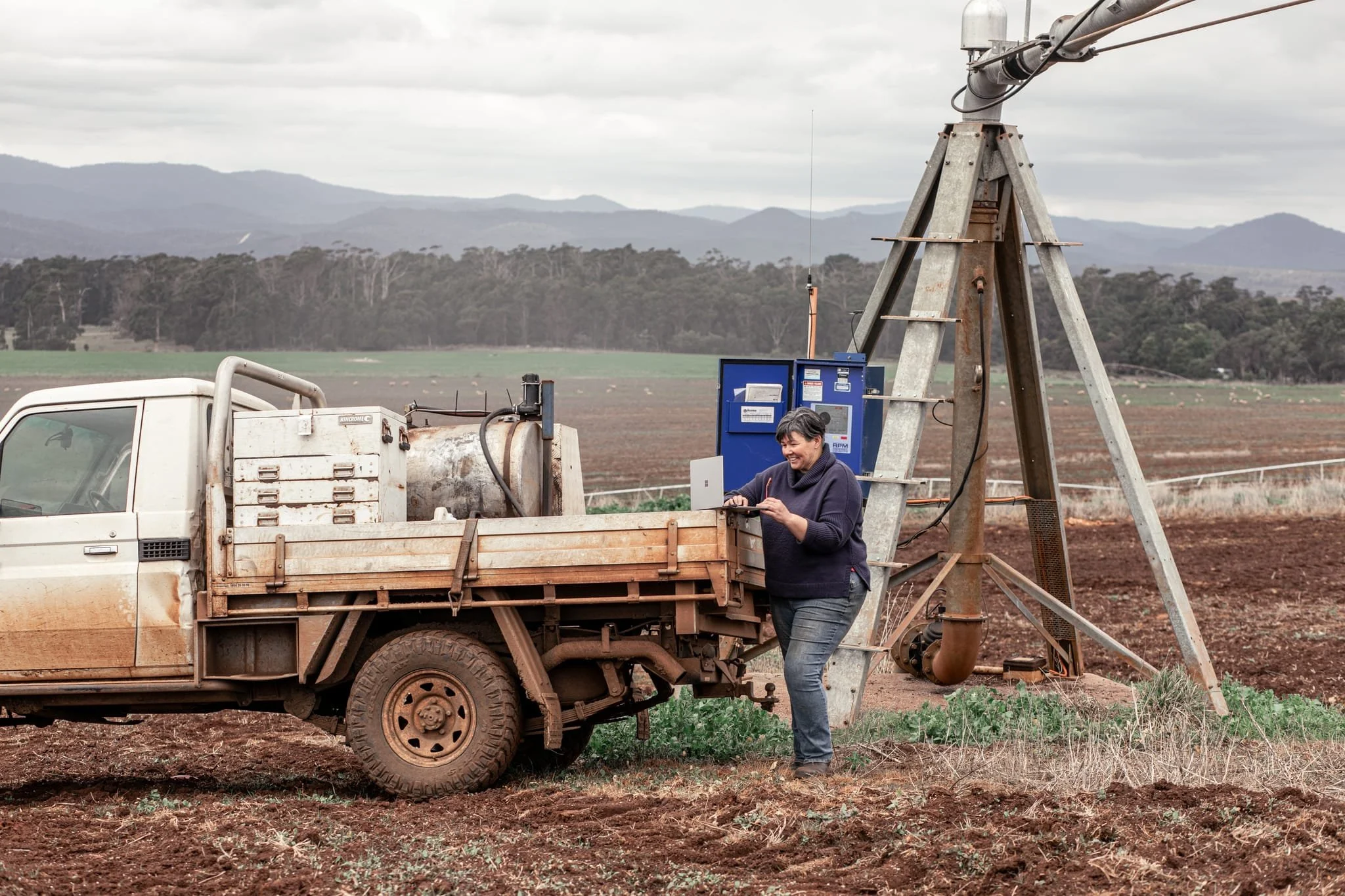
In this case study, Scott Atkins works with Ag Logic monitoring specialist Marek Matuszek to use a soil moisture probe on his property, showing how practical soil moisture monitoring technology supports smarter irrigation decisions and more efficient farm water management.
Real time measurements & automation for irrigation scheduling on a berry farm
How can I improve irrigation scheduling on my berry farm? What is the best way to monitor microclimate conditions in berry tunnels? How do I manage water and nutrients accurately in substrate grown berries? Can real time irrigation and climate data improve fruit quality and yield?
Precision irrigation and microclimate monitoring are essential in modern berry production, where crops are grown in controlled environments and depend on accurate water and nutrient delivery for consistent performance. In hydroponic systems, small changes in moisture, temperature or humidity can affect plant health, fruit size and overall yield. Advanced monitoring tools help growers track irrigation, substrate moisture and environmental conditions in real time, allowing them to respond quickly and maintain optimal growing conditions across every block.
At Hillwood Berries in Tasmania, farm manager Andrea O'Halloran shares how the business has expanded from 2 hectares of soil grown strawberries to 50 hectares of hydroponic strawberries, raspberries, blackberries and blueberries. All crops are produced under protective tunnels in coir and managed through a highly controlled irrigation system. By using TDR sensors and centralised computer systems that adjust irrigation based on environmental and microclimate data, Hillwood achieves precise water and nutrient management across multiple sites, including a new farm in Queensland. This case study highlights how irrigation monitoring and microclimate technology support consistent berry quality, efficient water use and scalable farm management.
Drainage lessons to optimise irrigation
Why is my paddock waterlogged even when it looks flat? How can I improve drainage in irrigated cropping systems? Does poor drainage reduce crop yields and root development? Can drainage mapping improve irrigation efficiency and farm productivity?
Effective drainage is critical for farmers looking to balance irrigation, prevent waterlogging and maximise crop performance. In irrigated paddocks, excess surface water and uneven moisture distribution can limit root growth, reduce nutrient uptake and impact overall productivity. By improving drainage design and managing surface runoff, growers can create more consistent soil conditions that support stronger crops and better irrigation outcomes.
In this case study, John Ramsay from Bothwell in Tasmania explains how he works with Reuben Wells at Ag Logic to address surface drainage challenges across his farm. Although the terrain appears flat, certain areas retain water and restrict runoff, making targeted drainage solutions essential. Reuben uses EM38 soil mapping and elevation data to develop detailed drainage models, with John receiving practical drainage plans that identify both visible and hidden problem areas. These plans are integrated into John's John Deere system for accurate implementation, including customised solutions for curved planting layouts. The result is improved irrigation performance, reduced waterlogging and clear gains in crop productivity across the farm.
Variable rate irrigation to drive water use efficiency
What is variable rate irrigation and is it right for my farm? How can I apply different irrigation rates across one paddock? Can VRI improve water use efficiency and crop yields in variable soil types? How do I stop over watering in some areas and under watering in others?
Variable rate irrigation is a precision agriculture solution that allows farmers to adjust irrigation rates across specific zones within a paddock based on soil type, crop requirements and topography. For growers managing variable conditions, VRI supports more accurate water application, reduces waste and improves overall crop performance. By matching irrigation to soil variability and plant demand, farmers can achieve better water efficiency and more consistent productivity.
In this case study from Bothwell in Tasmania, John Ramsay works with Ag Logic precision agriculture specialist Reuben Wells to implement variable rate irrigation on his cropping farm. Using EM38 soil mapping, elevation data and drainage modelling, they identify zones that are prone to over watering or under watering. Digital plans are supported by extensive ground verification, walking paddocks to confirm soil conditions and refine irrigation zones. While the process requires time and attention, it delivers strong returns in high value crops. With ongoing in-season adjustments based on soil and crop response, a well tuned VRI system provides precise irrigation management that enhances crop health and resource efficiency.
Remote monitoring of soil moisture
How can soil moisture monitoring improve potato yield and quality? When should I irrigate potatoes to protect skin finish and uniform tuber size? Can soil moisture probes help prevent defects, disease and downgrades in fresh market potatoes? How do I avoid over watering or under watering during critical growth stages?
Growing premium potatoes for the fresh market requires precise soil moisture management, where small irrigation mistakes can significantly impact yield, skin finish and overall market value. Inconsistent moisture can lead to blemishes, disease pressure, misshapen tubers and defects that reduce crop value. Reliable soil moisture monitoring gives growers the confidence to schedule irrigation accurately, maintain even moisture in the root zone and protect both yield and quality.
At Yum Tasmanian Gourmet Potatoes, Terrence Rattray explains how maintaining consistent soil moisture is essential to avoid defects that can reduce a potato’s value by up to 80 percent. The business uses EnviroPro soil moisture probes connected to Wildeye telemetry units across farms in Tasmania and Bundaberg, enabling remote monitoring and real time irrigation adjustments. This technology allows the team to quickly identify issues such as missed irrigations in remote paddocks and correct them before quality is compromised. By using soil moisture data to guide irrigation decisions, the farm protects premium potato quality, improves yield outcomes and strengthens overall productivity.
Technology and collaboration to underpin irrigation scheduling in vineyards
How do I schedule irrigation in my vineyard to improve grape yield and quality? How much water should I apply at each growth stage? Can soil moisture and weather monitoring help manage vine water stress? How do I balance canopy growth with fruit development in cool climate wine regions?
Vineyard irrigation is a precise management decision that directly affects grape quality, vine health and final wine outcomes. Applying too much or too little water at key phenological stages can influence berry size, flavour concentration and overall yield. Precision irrigation supported by soil moisture monitoring, weather data and crop modelling helps growers manage vine water status, optimise fruit development and use limited water resources more efficiently.
At Josef Chromy Wines in the Tamar Valley of Tasmania, vineyard managers Kellie Graham and Felipe Bustamante partnered with Ag Logic and SWAN Systems as part of a Wine Australia agtech demonstration vineyard project to modernise irrigation scheduling. Starting with ageing infrastructure and limited data, they introduced advanced monitoring tools to track soil moisture, weather conditions and crop water requirements in real time. Using the SWAN Systems platform, they recorded irrigation events, refined crop coefficients and adjusted water application according to growth stages. Despite early season rainfall during flowering, their data driven irrigation strategy supported balanced canopy growth, stable yields and high quality fruit. This case study demonstrates how vineyard irrigation scheduling powered by real time data can improve grape production and wine quality outcomes.
Land forming at Thorpe Farm, Bothwell to improve paddock performance
Will Bignell’s family have been farming in Bothwell for over two centuries, and their business hasn’t been this long lived by standing still. As part of a continual program of improving the productivity of their farm Thorpe, Will recently invested in land forming on one underperforming paddock. The paddock in question has had known issues with waterlogging, caused by several factors including:
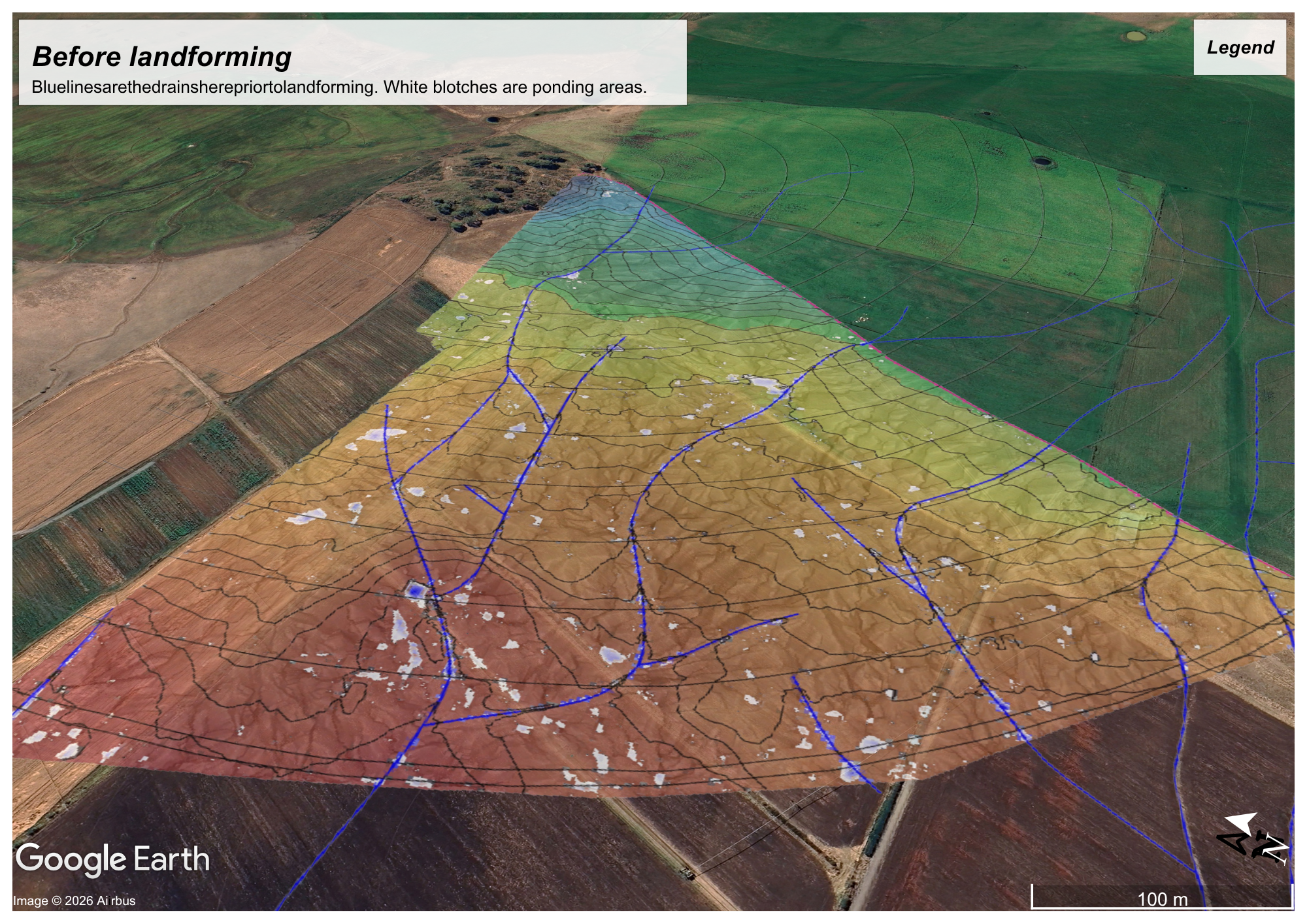
Paddock history and changing farming practices - The area was originally several small paddocks separated by hawthorn hedges with small drains underneath. It was later run as an irrigated cropping paddock, watered by a travelling linear irrigator, and a couple of years ago this was replaced and it is now irrigated using a large centre pivot irrigator. This history meant there were a large number of drains, tracks and small mounds from fence lines across the paddock, altering water flow.
Soil type - The soil in this paddock varied in texture and depth, but the lower lying areas generally had a shallow subsoil with very constrained drainage. This meant that there was limited root zone once water began sitting on the top of the subsoil clay.
Topography - This affected the paddock in two ways – it was generally a flat paddock, so small imperfections lead to large drainage issues, and there was a large catchment area above this section that added more water to the paddock, exacerbating the drainage problem.
How we fixed it:
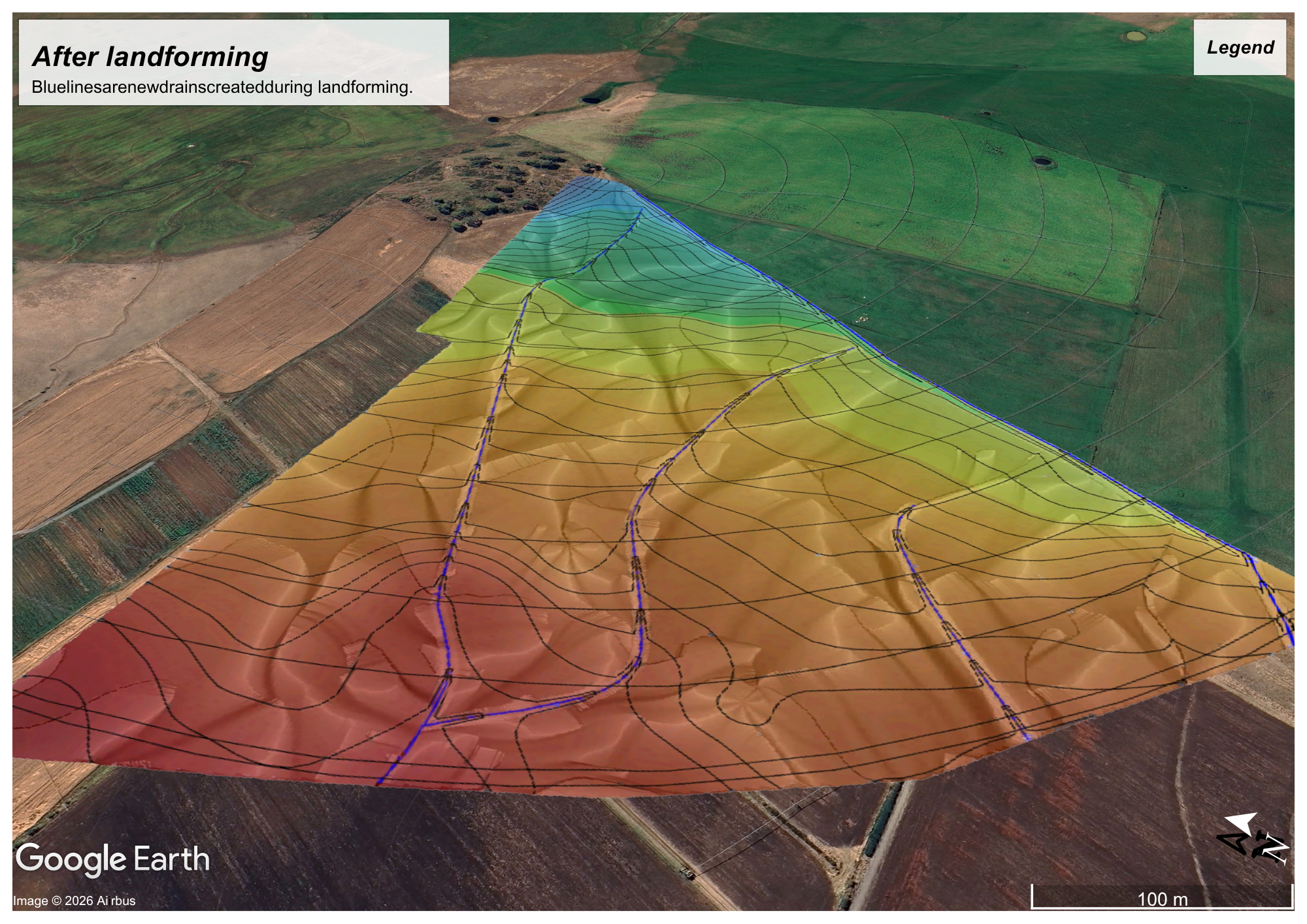
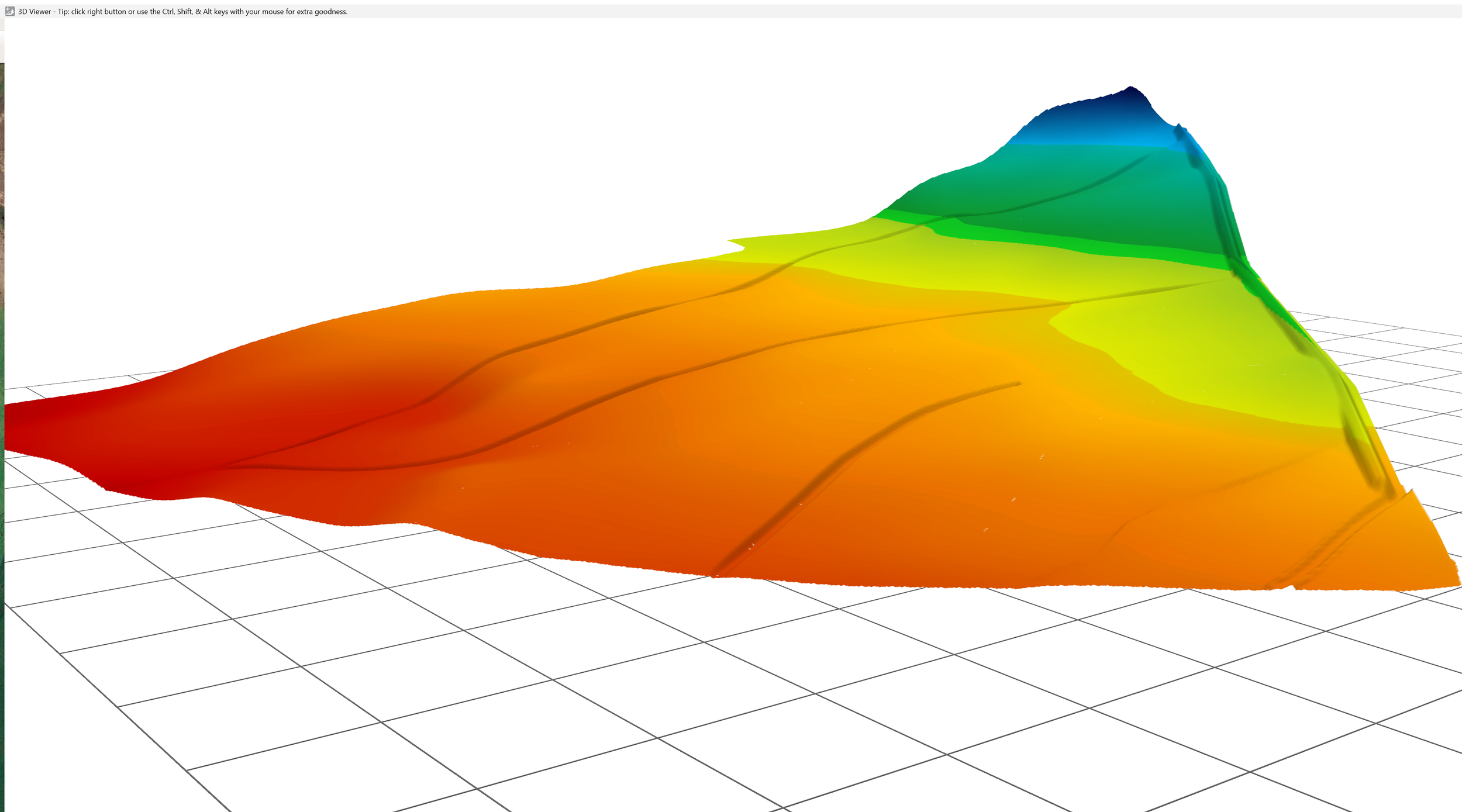
Mapping and design process - First, Ag Logic mapped the paddock using our side by side fitted with a high accuracy GPS system to collect elevation data, as well as an EM38 machine to allow a rapid map of soil type. We processed this data into T3RRA Design Pro software, and used this redesign the paddock surface into one that fixed many of these problems. This plan was sent to the rockstar team at Greenvale Ag Drainage, who headed to the site equipped with a 7m wide land plane, and a 3 m wide, 10 m³ capacity carry bucket. The Greenvale Ag Drainage tractors use T3RRA Cutta in the cab to control their implements. T3RRA Design Pro and T3RRA Cutta are Australian-developed software solutions specifically build for this purpose, by T3RRA in Toowoomba, so Ag Logic’s designs can drop straight into the tractor controller.
A few of the strategies we built into the design included:
A new cut-off drain - Designing a cut-off drain along the fence line that will divert water coming in from the paddock above. This drain will double as a pivot parking area so water draining from the pivot won’t create problems in the crop. The carry bucket allowed us to use the material cut from the drain to create a low levee on its downhill side, so the final drain depth was minimal but it still has a high carrying capacity.
Less internal drains - There was a maze of small drains in this paddock, even including some that split then rejoined further downslope. The number of these was significantly consolidated, from over a dozen to only four. They were straightened to make them more efficient, and cut with gentle batters so tractors and sprayers can pass through them at speed. The carry bucket was also very useful here, using material cut from new drains to fill redundant drains.
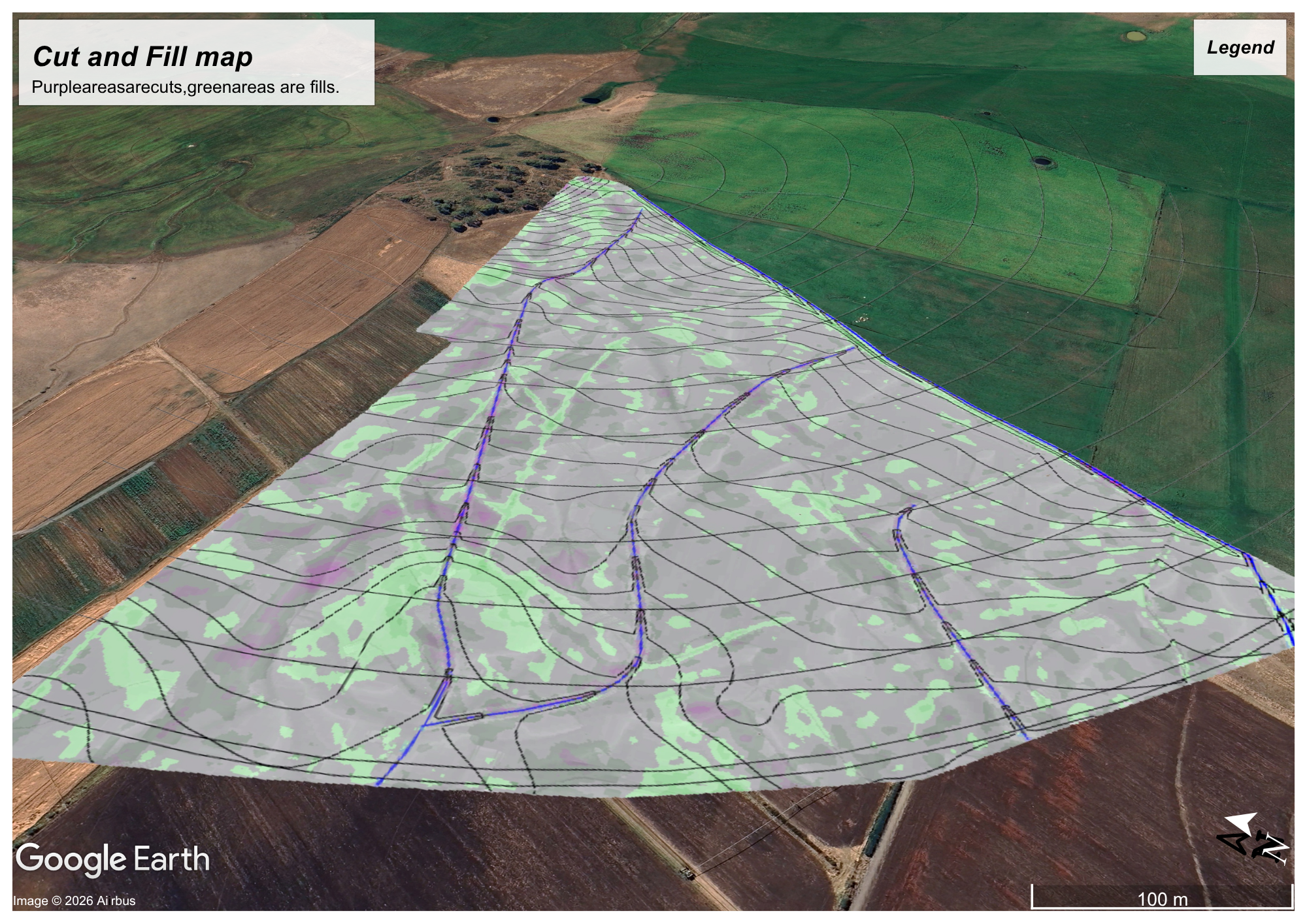
Land shaped between drains - The land plane was used to fill the small depressions between drains. Some of these were very shallow (maybe 3 or 4 cm) but on this soil type that is enough to cause crop death. We also used the land plane to pull material from sandy banks to fill the sides of bowls and improve the efficiency of water getting to the drain lines. By integrating the drain design with the land plane design we can guarantee water will move efficiently to the drains.
The largest cut in this paddock was around 14cm – it is amazing how little soil we need to move to have a major impact, using the design software and T3RRA technology, plus a few helpful satellites!